

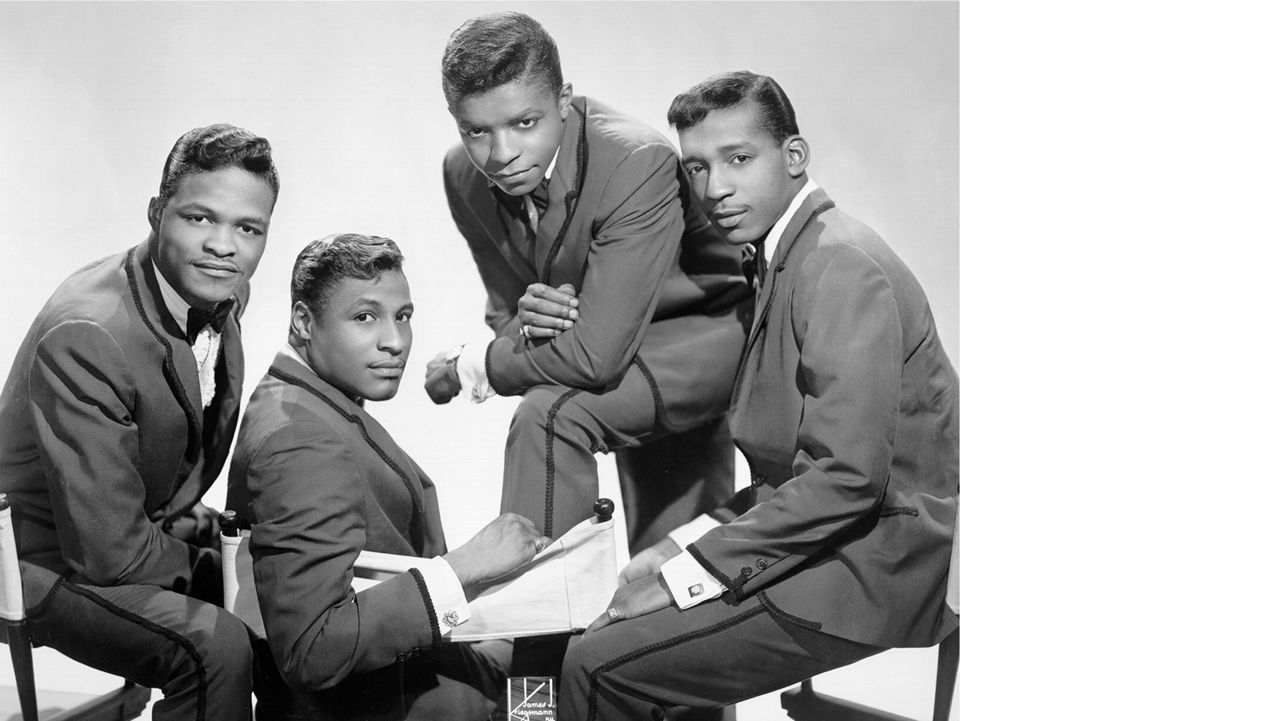
I became a hero after bringing a rock 'n' roll star to our school concert.
I went on to attend Abington Senior High School in Pennsylvania, where I was elected student body president. The term lasted only a year, but during that year I learned two principles that have guided me ever since. First, do what no one else is doing. Second, if you are going to commit yourself, it is just as easy to do something big as to do something small.
I set out to create a student council unlike any the school had seen before. The idea began to take shape during a summer family road trip to California. Sitting in the back seat of the car as my mother drove, I kept turning over a single question: "What is the greatest thing I can possibly imagine doing?"
When I was a kid, long-distance phone calls were expensive, so I couldn't just call my fellow student council members. So instead, whenever an idea struck me, I wrote it down on a postcard and mailed it to my vice president. I sent them, one after another, from towns along the way. Around this time, I also began to develop the habit of letting ideas work on me in the background, even while I slept.
What finally emerged was an audacious idea: to bring one of the leading African American vocal groups of the rock 'n' roll era to perform at our high school. The group was Little Anthony and the Imperials. For a music lover like me, they were a dream, but not just for me. They were admired by the whole student body.
My fellow students were skeptical. "You're crazy," they told me. "Why would national stars come to some suburban high school?" "We're just kids." Yet beneath the skepticism, I could sense another feeling: If only they really would come.
In the end, they did. One student's father had a connection to the group's agent, and the concert came together, almost certainly, as a favor to him. There was no other obvious reason why a famous act would perform for students like us, with no real ability to pay what they were worth.
The concert was packed, and the atmosphere was electric. Overnight, I became a hero. I myself had not changed in the slightest, yet suddenly people looked at me as though I possessed some superhuman power. In basketball, an ordinary shot may be worth two points, but a game-winning basket at the buzzer carries a different kind of weight. That was how it felt.
The episode taught me a great deal. Defining what you want to do matters less than actually getting it done. Try to imagine the best thing you could accomplish in a given situation. If you can imagine it, the next step is simply to do it. And if you can produce something that delights everyone, you gain not only gratitude but trust. That trust, in turn, gives you permission to attempt still larger things.
In the years after World War II, the United States stood at the summit of the world. But the country was approaching a profound turning point, and the symbol of that moment was the tragedy surrounding President John F. Kennedy, who was elected in 1960.
Young, handsome and married to the glamorous and admired Jacqueline, Kennedy stirred the imagination of Americans. He especially captured the hopes of young people. Politics seemed exciting, noble and personal. Then, in 1963, he was shot dead in Dallas, Texas. Most Americans of that generation can still tell you exactly where they were when they heard the news.
I was in the bleachers of the gymnasium at a pep rally for Abington High's sports teams. A teacher rushed in and announced over the microphone, "President Kennedy has been shot. He will probably die." Students began to weep. Their grief reflected how deeply they had invested in him, and in the political promise he seemed to represent.
Something in America died at that moment. Perhaps it was the naivete that had allowed us to believe that such a thing could not happen, that a figure like Kennedy would somehow be protected by the sheer force of what he represented. My sweeter illusions fell away. I came to feel, with a new urgency, that a better world was not something to be inherited, it was something one had to help build.
At Abington High, I also threw myself into sprinting on the track team, and there I met two people to whom I owe a great deal. One was my coach, Jack Armstrong, a remarkable leader whose teams compiled an astonishing record of 186 wins and only four losses in dual meets.
I remember training so hard under him that by the end of almost every practice I was vomiting. Yet I could never hate him for it.
He never displayed his emotions, but possessed an intuitive understanding of each athlete. He seemed to know exactly how far he could push every person on the team, and how to bring each of us as close as possible to our maximum potential. To me, he remains the model of what a mentor should be.
The other person was a fellow sprinter, Bobby Bryant. His life would widen my horizons in ways I could not yet have imagined. I will turn to him next.
Originally published in Nikkei Asia, October 2026