

The wave of Japanese capital in the US crests—and subsides.
In 1987, a tide of Japanese capital—led by Nikko Securities—entrusted vast sums to the buyout fund we were running at Blackstone.
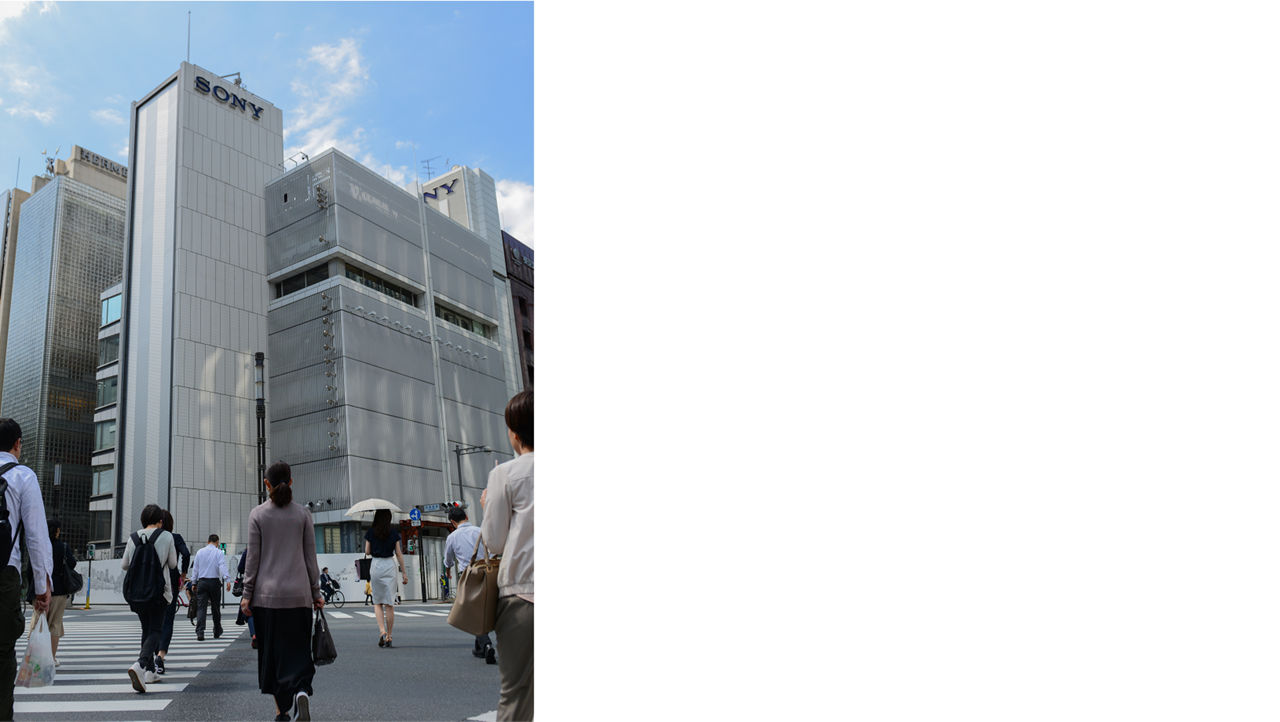
At the same time, Sony (now Sony Group) became one of our earliest clients in the M&A advisory business.
It was Pete Peterson, our chairman, who opened the door to Sony. He had served as secretary of commerce in the early 1970s under President Richard Nixon and had been close to Akio Morita, Sony's co-founder, since that time. Peterson would later join Sony's board of directors.
One Sunday night in 1987, as I was watching television at home, the phone rang. It was Michael "Mickey" Schulhof, a friend and senior Sony executive who then headed the company's U.S. operations.
"I have some business thing I need to talk to you about right away," he said. "Mr. Morita asked me to call you and tell you that we're interested in buying CBS Records, and we'd like you to represent Sony."
CBS Records was a storied label, home to artists such as Michael Jackson, Bruce Springsteen and Barbra Streisand. Together we pulled off a $2 billion trans-Pacific acquisition, the largest Japanese purchase of a U.S. company anyone had yet seen. The deal shocked Japan. Not only was cross-border M&A between the United States and Japan virtually unheard of after World War II, it was also out of fashion.
Morita soon came back with another ambition: He wanted to buy a movie studio. Sony had been locked in a standards battle over home video, with its Betamax format losing ground to the VHS system backed by Panasonic's parent company, Matsushita (now called Panasonic), and other rivals. Morita believed that owning a library of film content would give Sony the upper hand.
In 1989, Sony acquired Columbia Pictures Entertainment for $3.4 billion in cash and assumed another $1.4 billion in debt, making it a $4.8 billion transaction overall.
But the deal quickly became entangled in a Hollywood contract fight. Sony wanted producers Peter Guber and Jon Peters, fresh from the success of "Batman," to run Columbia—only to discover that they were already bound by an exclusive five-year contract with Warner Bros.
Warner sued, accusing Sony of poaching its talent and demanding $1 billion in damages. The intermediaries had failed to communicate clearly.
Then Morita called me directly. "Steve, you must settle this litigation. I only want you and me to talk to the Warner people, no one else from Sony." We managed to work out a settlement with a package of assets and rights valued far below what Warner had demanded.
Sony was hardly the only Japanese company buying in America. In 1988, Blackstone advised Firestone, one of America's great tire makers, on its nearly $2.6 billion sale to Japan's Bridgestone.
Blackstone, with fewer than 20 employees, was suddenly closing one cross-border deal after another. I decided we should take out a full-page advertisement in the Nikkei. If we were going to make a statement in Japan, I thought, it should be a big one. It would shock people there because they were not used to M&A.
I wrote the copy myself. M&A was not a money game, I argued, but—as the Sony and Bridgestone deals showed—a form of friendly, constructive partnership.
We also took a group photograph of the five partners—Pete, myself and the others—lined up in a row. People later joked that it looked like a scene from "Seven Samurai." The layout was excellent. When I saw the galley proof, I congratulated myself: This is a great ad.
But the next morning I woke with a jolt. It was in English. We scrambled to translate it into Japanese. The headline became "The Era of New M&A." The ad ran in the morning edition of the paper on June 17, 1988.
The momentum, however, did not last. In the early 1990s, Japan's asset-price bubble burst and the wave of outbound Japanese M&A quickly subsided. I began advising the leadership at Nikko—with whom we had long exchanged M&A referrals—to find a new American partner.
"You know, we're not the right partner for you, not for your basic business," I told them. "What you need is an American brokerage firm that creates products for retail customers."
In 1998, Nikko formed exactly such a capital alliance with Travelers Group, now part of Citigroup.
Because U.S. regulators would not allow Nikko to partner with two firms at once it had no choice but to end its alliance with us. The Blackstone office inside Nikko was closed, and for us, Japan entered what became a lost decade.