A deal in a Tokyo taxi changed Blackstone's trajectory.
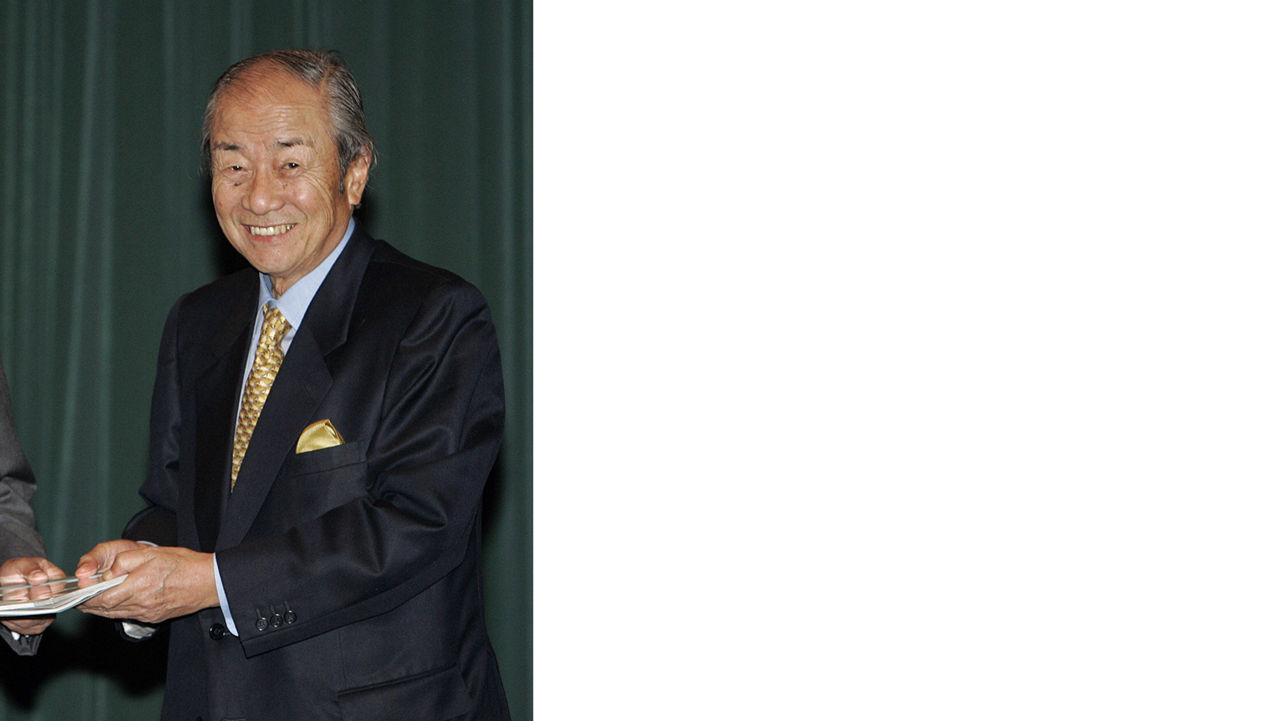
In the first few years after its founding in 1985, Blackstone languished in obscurity. What changed our fortunes was Japanese money. And the man who set the table for us was Yasuo Kanzaki, then head of the international division at Nikko Securities.
It was 1987, before Japan's asset-price bubble had reached its peak, and Japanese financial institutions were expanding aggressively in the United States. Nikko was among them. When I asked their people in New York what they hoped to do in America, the answer came back: "We want to advise on mergers and acquisitions."
I shook my head. They had no chance of succeeding in the American M&A advisory market.
"Your English isn’t fluent," I told them. "You can't catch the nuance of the language."
In M&A, nuance is everything. People do not always say exactly what they are thinking. If you cannot understand clearly what they are saying, you have no chance of discerning what they may actually mean.
My counterpart looked a little sullen. So I proposed a different kind of partnership. Nikko would bring the Japanese companies, we would handle the practical work of M&A in America. Whenever a deal closed, we would split the fees down the middle.
Word came back from Nikko that they wished to meet in Japan. The man who received our chairman, Pete Peterson, and me in Tokyo was Yasuo: short in stature, direct in manner and brimming with energy.
Yasuo was intrigued by the prospect of Blackstone working with Nikko to serve Japanese clients coming to America in search of acquisitions. "I think that is an excellent idea," he said. "We're very interested in doing that, potentially, with you."
It was then that I revealed my other purpose -- and, in truth, my foremost one. "We would like you to invest in our buyout fund."
Yasuo warmed to the idea, but on one condition. "I don't want you talking to anybody else in Japan in the brokerage area," he said. We agreed.
But the next day, disaster struck. A meeting with Nomura Securities that should have been canceled had somehow remained on the schedule. Jet-lagged, I dozed in the back seat of the car, only to wake and find that we had pulled up in front of Nomura's offices.
From the car phone, I called Yasuo, apologized, and asked what I should do. Then came that unmistakable Japanese sound of discomfort: the soft intake of breath through the teeth, "Ssss," the sound of a man recognizing that an unwelcome complication had just landed in his lap.
"I do not want you to do a deal with Nomura," he said. "How much money do you need?" Pete was holding out for $50 million. I overrode him. "$100 million," I said.
"Okay," Yasuo replied. "Done."
Nikko then took us on a weeklong fundraising tour. As if our string of failures in America had been a bad dream, every firm we visited invested. Nikko, long closely affiliated with the Mitsubishi group, had quietly worked the group's companies in advance and secured a green light from each.
The money raised in Japan came to $325 million, a staggering sum from a country that had never before invested in a buyout fund. It accounted for nearly 40% of the fund's final size of $810 million. When I say, as I often do, "No Japan, no Blackstone," this is the history behind the words.
My friendship with Yasuo continued over the years that followed.
I marveled at the ferocity of Japanese work habits: laboring until 1 in the morning, then returning to the desk by 8. And when I learned of a corporate culture in which a single failure could get a man banished to the provinces, I wondered how anyone could dare attempt anything new.
Unusually for a Japanese businessman of his generation, Yasuo enjoyed socializing with family. Once, when he and his wife invited us to a ryotei, a traditional Japanese restaurant, he let my son Teddy, then still a boy, taste sake. When Yasuo later left Nikko, I gave the golf-loving man a set of the finest clubs.
Yasuo died in March 2019, at the age of 87. I had been told that he had called me, and I telephoned his mobile every day, but there was no answer. A foreboding came over me, and I heard myself saying to those around me, "He must have died."
News of his death came the following week. His call, it turned out, had been to share his thoughts on an interview of mine that had run in the Nikkei in February.
Trade negotiations between America and China were then entering their decisive phase, and I, serving as a go-between for President Donald Trump with Chinese President Xi Jinping, had observed that “President Xi and his colleagues understand they must act differently than in the past.”
Yasuo changed the history of our business. Nikko's investment in us brought the firm wealth even as Japan's bubble collapsed around it. He was a friend without equal.
Originally published in the Nikkei, October 2026