

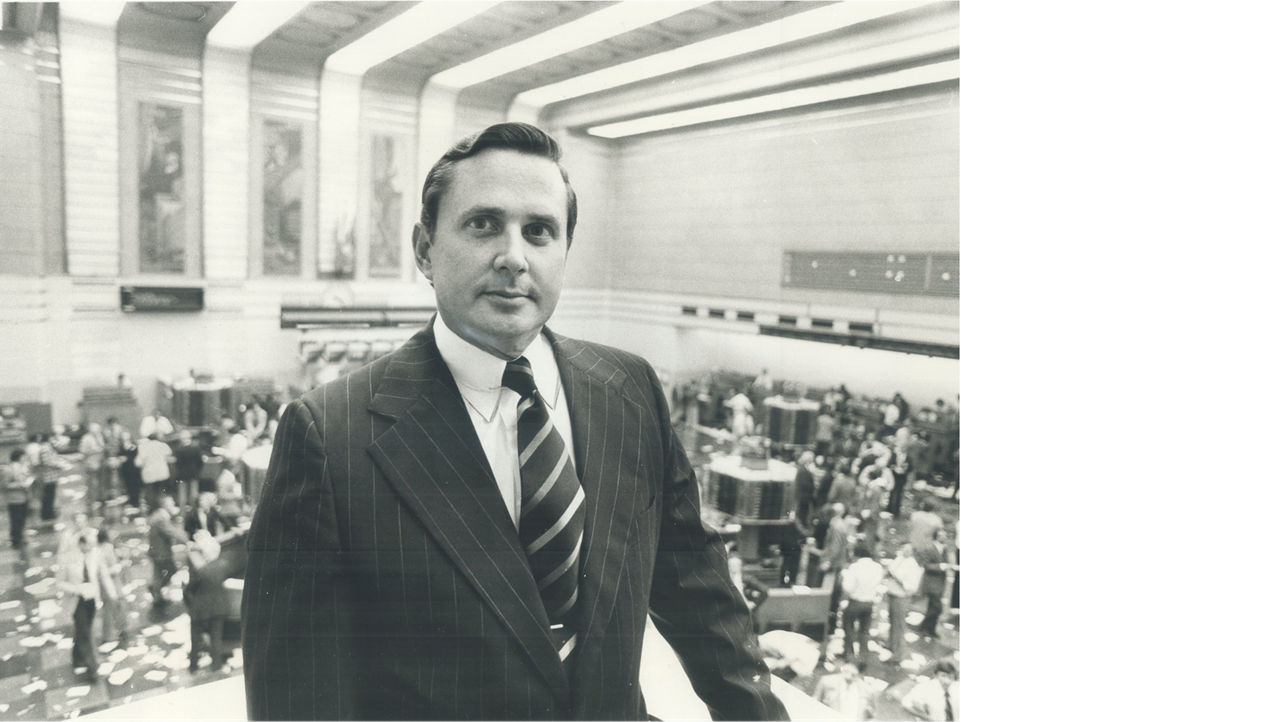
Life after Lehman: Building a new career.
In 1984, Lehman Brothers passed into the hands of American Express. The following year I left to found Blackstone, though until then I had never thought of myself as an entrepreneur.
I loved Lehman. In truth, I had wanted to build my career there. But after living through the internal feuding that ultimately brought the firm down, I could not bring myself to stay and work alongside people who had betrayed its traditions.
There was another reason as well. As part of the deal that brought Lehman under the American Express umbrella, we were required to sign noncompete agreements that barred us from going to a competitor. With that path closed off, I decided to strike out on my own with Pete Peterson, Lehman's former chief executive.
At American Express, I must have looked thoroughly underused. Jim Robinson, the company's chief executive, was kind enough to notice.
Jim came from Atlanta, Georgia. His father had run one of the city's leading banks and Jim himself had made a formidable success of his years at the helm of American Express. He carried himself with an old-fashioned courtliness, yet beneath the polished manners he could be admirably direct. I liked talking with him and I enjoyed working with him.
I was given the office next to Jim's. On the other side was Lou Gerstner, the president of American Express, who would later become famous for turning around IBM. Jim gave me my assignment: "You can work on some deals for American Express and teach Gerstner something about finance."
Perhaps Jim had discerned some "statesman" in me, for he also opened a door for me at the White House. He arranged an interview with Jim Baker, then chief of staff to President Ronald Reagan and later treasury secretary, who would preside over the Plaza Accord of 1985.
After the meeting, it was informally settled that I would become the No. 4 person on the White House staff. But just then came the announcement that Baker would become treasury secretary and that the sitting treasury secretary, Don Regan, would take Baker's place as White House chief of staff.
People on Baker's team began urging me not to take a White House job. Don Regan, they said, was a very difficult man. He made serious errors in judgment and then blamed them on the people who worked for him. Those people ended up being fired for his mistakes. "That will happen to you, too," they warned.
What they proposed instead was a post as assistant secretary of the treasury, with responsibility for managing the refinancing of the government's debt. But the position had been vacant for two years and the government's bonds had sold without incident all the while. What, then, was the point of my taking the job, I wondered.
"Well, the job doesn't matter," they said, trying to persuade me. "You'd just be on our team." But there the matter ended.
Pete, after being forced out of Lehman, had started a small investment firm with a few associates, doing small deals. I approached him with the idea of joining me in founding what would become Blackstone. My pitch was the same then as it has always been: If you are going to devote your life to a business, choose one with the potential to become enormous. At first, Pete may have been drawn to working with smaller companies. It was a change from his Lehman days. But as time went on, I think he began to realize that he would rather be dealing with large corporations again.
Initially he suggested something more tentative. "Well, maybe you could join this other firm," he said, "and we could do that, too."
But I pressed him. "I don't want to be in business with people I don't know. I know you. If you'd like to join me and build a business focused on larger companies, that would be great."
In the end, he agreed.
Pete had been a brilliant student, graduating with the highest honors and election to Phi Beta Kappa, and he approached everything in a process-oriented, analytical and logical way. I, in contrast, operated more by instinct. I was quick to read people and understand what they wanted.
With his relationships in the outside world, Pete had connections that could reach almost anyone in America. I had the ability to figure out why we should be reaching them. Our skills and personalities were different, but they were complementary. We made an ideal pair.
"You should be the CEO," Pete said. "I've been a CEO twice before."
He had had his fill of the pressure. And so our division of roles was settled: Pete would be chairman and I would be chief executive.
Originally published in the Nikkei, October 2026