

The choice was made 10 years ago.
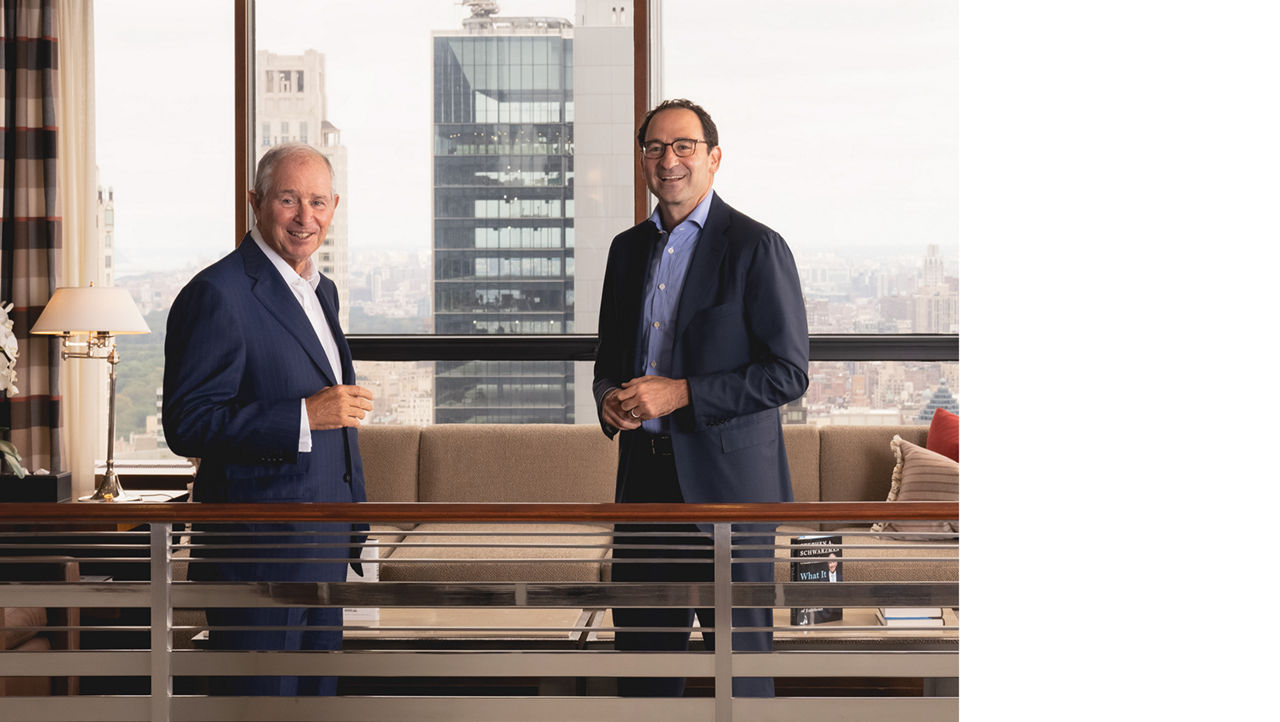
I have served as Blackstone's chief executive for 41 years, one of the longest tenures of any leader of a major American corporation. The question of succession, however, has already been settled. Jon Gray, our president and chief operating officer, will succeed me. He is 56, 23 years my junior.
As Blackstone expanded, I began looking, around 2000, for someone with whom I could share the burden of running the firm. The man I eventually found was Tony James, a superb investor and a great manager, who was then making his name at Donaldson, Lufkin & Jenrette.
Tony joined Blackstone in 2002 as vice chairman and COO. Without him, our initial public offering in 2007 would never have happened.
Then, in 2016, Tony told me that he intended to retire in two years. He had reached the point, he said, where age had to be taken seriously. We therefore had to choose someone to succeed him.
"Who do you think we should pick?" I asked.
"It's obvious," Tony replied without hesitation. "It's Jon."
"Of course it's Jon," I said.
Jon Gray had joined the firm in 1992 and had risen to lead our real estate business, executing landmark investments such as Hilton Hotels and Equity Office Properties. But it was not any single transaction that made him the obvious choice. It was his judgment.
In 2006, I added Jon to our management committee. From then on, week after week, I watched him at our Wednesday meetings, which convene at 8:30 in the morning.
Around that table, Jon consistently displayed the finest all-around judgment of anyone present. The harder the problem, the calmer and more confident he seemed as he articulated the course we ought to take. Over time, it became unmistakably clear to both Tony and me that Jon was the right person to succeed him.
Tony and I called him in.
"We both believe you're the right person," we told him.
"Geez, that's terrific," Jon said. "Tell me what you want me to do."
"Learn the firm while Tony is still here," we replied.
Our other instruction was equally important: Say nothing. We said nothing ourselves.
Once we had decided that Jon would succeed Tony, we began bringing him into the most sensitive areas of the firm. He attended meetings far beyond his real estate domain, including discussions of personnel matters and compensation. Sitting beside Tony, he watched the process quietly and inconspicuously. We wanted him to learn what it would take to manage Blackstone without feeling the pressure of an announced succession.
By the time Jon formally succeeded Tony in 2018, he understood Blackstone in all its complexity and breadth. He had spent two full years shadowing Tony as an apprentice. And Tony, even after giving up the post, stayed on at the firm to watch over him and make sure that the transition worked.
Many companies simply announce to someone, out of the blue, "You're in charge now." I have always thought that misguided. When several people have been competing for the top job, the shock of a sudden decision reverberates through the organization and leaves lasting scars.
There is also the founder's frame of mind to consider. Companies that keep growing after their founders depart are those in which an entrepreneurial culture has truly taken root, where the next generation of leaders can make difficult decisions independently once the founder is gone.
Conversely, when a founder refuses to delegate, insists on making even minor decisions personally, and fails to institutionalize the habits of judgment and growth, the organization becomes fragile. It may look strong as long as the founder remains in place, but it collapses once that person leaves.
Many hedge funds depend on a brilliant founder while everyone else merely plays a supporting role. That is precisely why such firms find so few buyers when they try to sell. Without the founder, there is often little institution left.
Jon is a superstar. He already oversees Blackstone's day-to-day management, and he has been accumulating experience in that role since becoming COO in 2018. We speak almost daily, and he continues to learn. If I were to disappear tomorrow for reasons of health, the firm would go on growing under his leadership, unchanged.
Everyone inside Blackstone understands that Jon is my successor. When, then, will I actually hand over the chief executive's chair? All I can say for now is: We'll see.