
The End of Pure Market Investing.
Of all the events I have lived through in finance, none has intrigued me more than the global financial crisis that began in 2007.
After Lehman Brothers collapsed on Sept. 15, 2008, equity markets around the world went into free fall. Yet experience had taught me one essential rule: if the financial system itself could be saved, the economy and share prices would, in time, recover. I watched that process unfold at close range.
The turning point came when people began speaking routinely of "trillions of dollars"—a unit of account that, until then, had scarcely been used outside discussions of the U.S. federal budget.
On Oct. 3, the Emergency Economic Stabilization Act became law, giving the Treasury authority to use public funds to stabilize the financial system. The program, initially presented as a way to remove troubled assets from bank balance sheets, soon became the vehicle for recapitalizing banks through direct injections of public capital.
At the same time, the Federal Reserve was expanding dollar swap lines with major central banks around the world. Through those arrangements, the United States could supply the reserve currency the global system desperately needed, enabling key central banks to provide dollar funding to institutions in their own jurisdictions.
My refrain had long been, "Show me the money." To stop a run on a bank, words are not enough. You need money on an enormous scale. Now America's leaders had begun to act on that scale. The worst, I concluded, was over.
In mid-October, I was asked to speak at the Technical University of Munich. Tell us what happens next, they said. The largest auditorium was packed to the aisles, and fear was written across the faces of the audience. I told them flatly, "The financial crisis is over."
As I left the hall, a flicker of doubt crossed my mind. What if I'm wrong? Then I thought it through once more. No, I decided. There is no possibility that I am wrong.
After the crisis, I began to spend some time in Washington. Having seen with my own eyes how the government contained the crisis, I realized that investing could no longer be separated from policy. It was no longer enough to ask, "Where are the good deals?"
Nor was it enough simply to gather intelligence on policy. At times, policy itself had to be changed. Governments are subject to pressure from every direction, and when policy is moving in a harmful direction, someone has to make the case that it is contrary to the national interest. I brought Wayne Berman, a masterful government relations professional who understood better than almost anyone how Washington worked, into the firm.
Because we invest around the world, my dealings with politicians and senior officials extend far beyond Washington.
After the Munich lecture, as I was heading to the airport, my phone rang. It was an aide to President Nicolas Sarkozy of France.
"I understand you're going to Russia for a meeting with President Dmitry Medvedev with a bunch of the Wall Street people," he said.
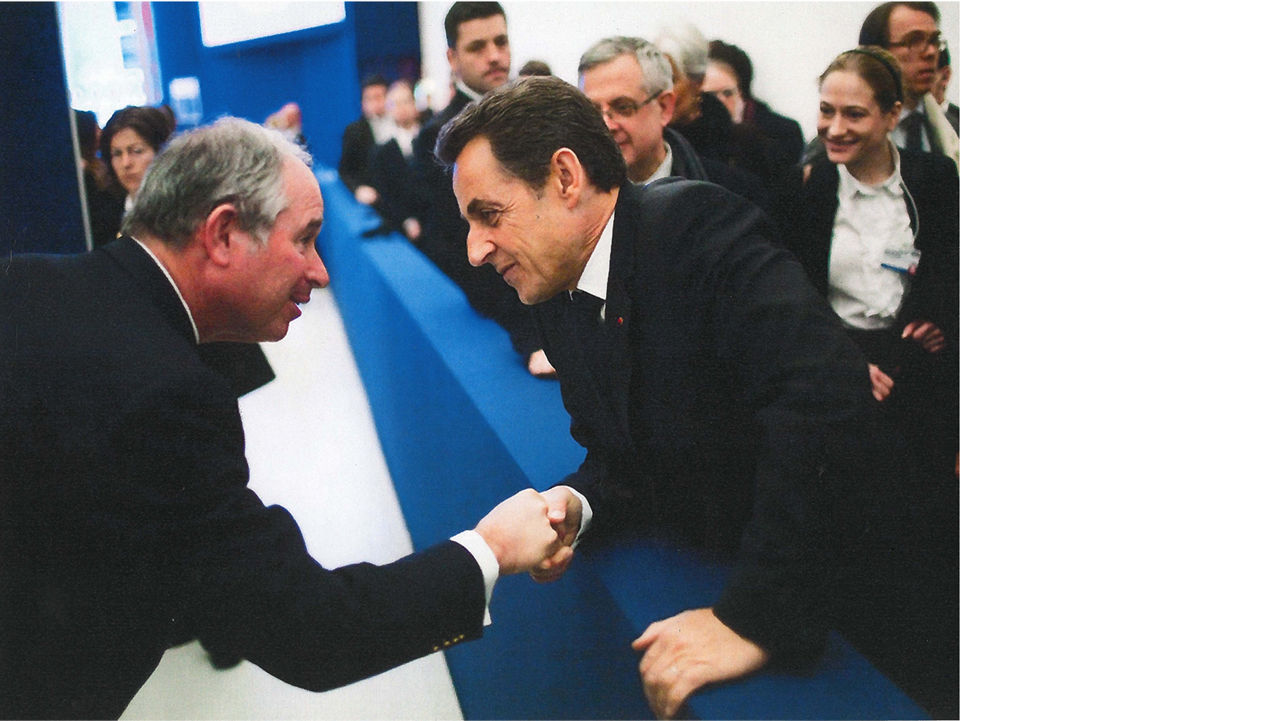
Sarkozy and I owned houses near each other in the south of France, and our wives and we had dined together. France then held the rotating presidency of the European Union. The request was simple but extraordinary: I was to ask Medvedev to contribute 10 billion euros to Europe's crisis response.
That required a one-on-one meeting. Medvedev's staff said he had no time.
"I need two minutes," I told them. "Tell him the president of the EU wants me to deliver a message."
Then I was told there was nowhere to meet.
"I'll meet him in a closet," I said.
I got my meeting. I delivered the message and, as I left, said, "Well, that didn't even take two minutes."
Calling the top of a market is not especially hard. Calling the bottom is. Most people buy on the way down and end up nursing losses.
And even if you do buy at the bottom, there is no guarantee that prices will rise soon.
In 1982, for example, when oil collapsed, Houston office values collapsed with it. You could have bought at the bottom and watched prices fall no further. But they did not rise either. For 10 years, you would have made nothing.
Our rule is to hold off buying until the market has risen at least 10 percent from its lows. Even then, there is ample profit to be made. Don't be greedy. Give the market its 10 to 15 percent.
To have judged, in October 2008, that the crisis was over was, I believe, remarkably early. The Dow Jones Industrial Average did not reach its final bottom until March 2009, and it was later still—into 2010—before Blackstone began taking on risk again.
Originally published in the Nikkei, October 2026