

The willingness to try new things is needed more than ever.
I have lived my life in pursuit of the new. It was that impulse that led me, as a boy, to bring a famous rock group to my small-town high school, and later, at Yale, to bring ballerinas to a university that was then still all male.
Blackstone began in 1985 with three lines of business. Today there are 85. One venture after another has been created inside the firm itself.
The entrepreneurial spirit in me cannot be understood apart from the history of America. When the United States was founded 250 years ago, there was no established order. Americans of that era had little choice but to make their own way and work out for themselves how to live their lives.
Therein lies a great difference between the U.S. and places like Japan or Europe, whose social orders were built over thousands of years.
At the time of its founding, anyone could come to America. The nation's culture was not a single, settled thing but a jumble. Immigrants had no choice but to carve out their own paths, with scarcely anyone to rely on beyond their own families.
To cross an ocean to a new continent was itself a risk. Newcomers arrived not knowing what awaited them, sent off with little more than a "good luck," from those they left behind. To survive, they needed a powerful capacity to adapt. In that way, our ancestors cultivated what came to be called the pioneer spirit.
I inherited a "gene" for embracing risk, one that began with my great-grandfather who crossed over from Austria.
When I arrived at Yale, I wanted a stereo so I could listen to music in my room. But stereos were expensive, so I hit upon the idea of selling personalized stationery printed with the university's name and that of the student who purchased it. I took over the Yale stationery concessions and walked every stairway in every dormitory, knocking on door after door as I tried to persuade students to buy writing paper with personalized letterheads.
I did not set out to become an entrepreneur; I simply wanted to listen to good rock and roll in my room. There was something I wanted, and if my parents were not going to give me the money, I would figure out a way to earn it myself. In America, this is an ordinary way of thinking.
One mark of a good entrepreneur is a willingness to accept that mistakes will happen. If you move quickly, you inevitably run the risk of getting things wrong. The question is whether you can identify the cause and change your method of execution, or the product itself. That is possible only if you are capable of learning.
This is something America does well, and it, too, has to do with how the country came into being. America was formed by people of every ethnic background gathering in a place where there was no settled order. It did not inherit the uniform values or fixed patterns of thought found in other countries—the kind that can turn failure into lasting social stigma.
As I will discuss later, Blackstone is driven by a simple corporate ethos: "Don't lose money." That may sound at odds with my earlier point about embracing risk, but it is meant to warn against foolish failures. If, after considering a matter properly, you are convinced something is worth doing, it does not matter if, in the end, it does not work out.
Failure is unpleasant, of course. It means recognizing that the vision you believed in was wrong. But that recognition is only the beginning of the journey. What matters more is to change your vision based on what you learn. You do not need to be 100% right from the start.
Japan, over its long history, has organized its society with extraordinary discipline. Unlike America, with its wide space for pioneering, Japan has limited arable land. Given such a historical background, it is natural that Japanese differ from Americans.
I am not saying an entrepreneurial spirit cannot take root in Japan. Entrepreneurs are nurtured in their native soil. The willingness to attempt new things—an attitude one often sees in the Chinese—is needed more than ever in Japan. The Japanese, with their high level of education, surely possess that potential.
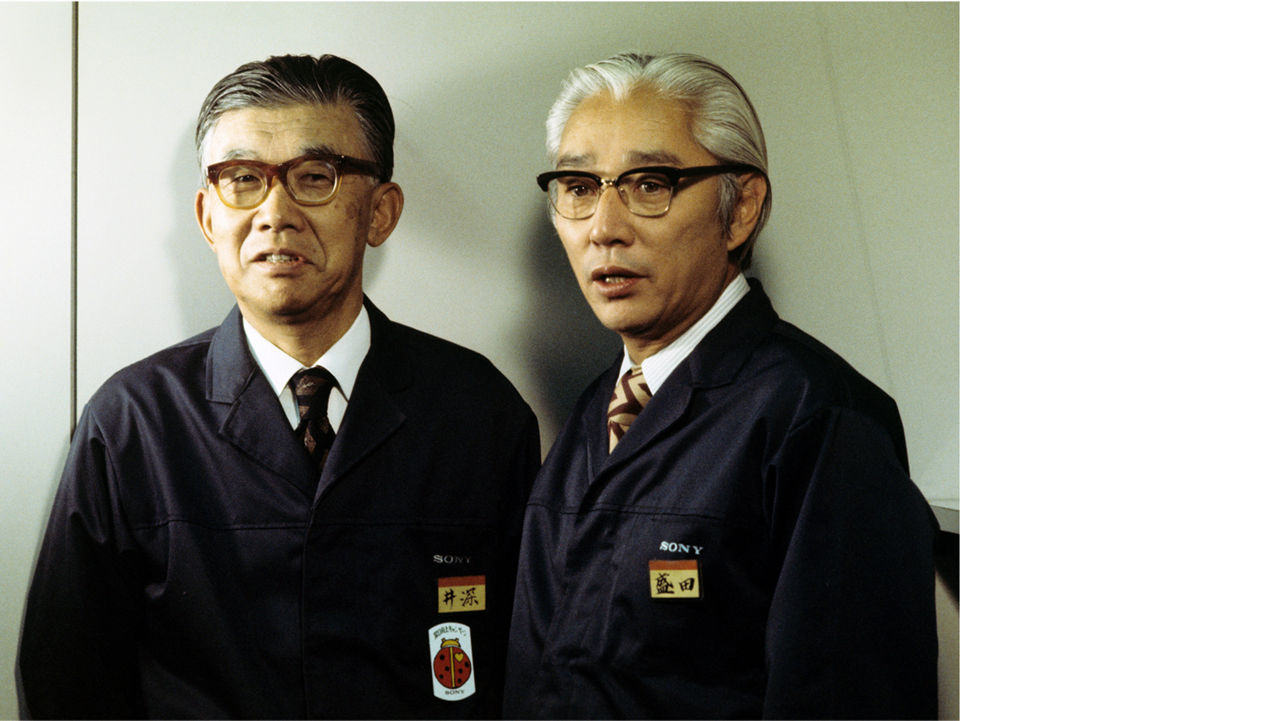
Do young people in Japan today know the names Akio Morita and Masaru Ibuka? They were the great entrepreneurs who founded Sony after World War II and, in a single generation, built it into a company that swept the world.
If the achievements of these two men were written into school textbooks and taught to children, the number of entrepreneurs in Japan would surely grow.