Hard Assets in a Changing World

June 11, 2026

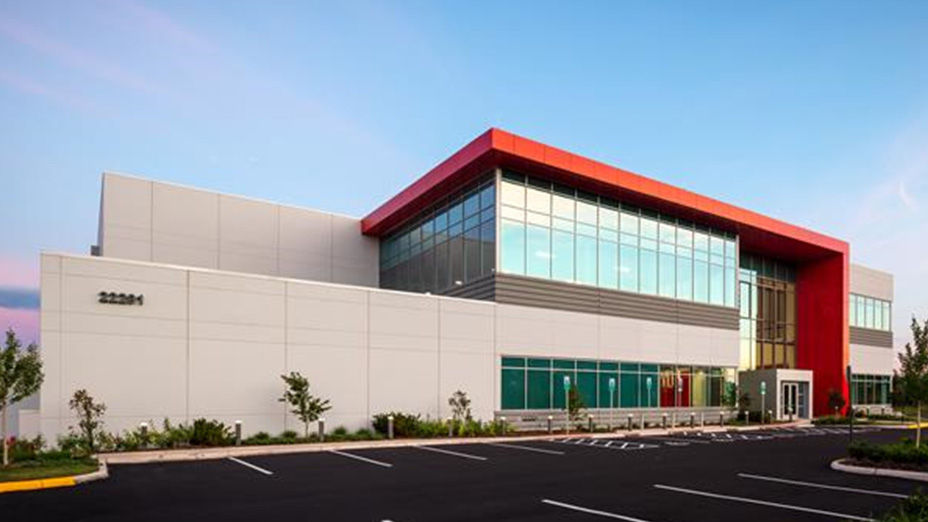
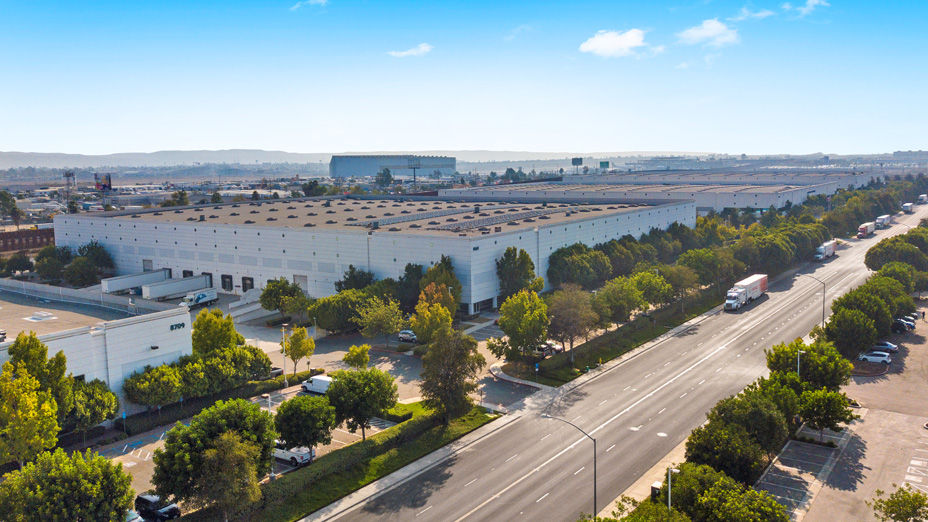
Hard assets, such as infrastructure and real estate, support the movement of data, goods, power, and people.

Their relevance is being amplified by changes in how the economy operates—including AI adoption and rising data consumption, e-commerce, supply chain reconfiguration, and growing power demand. These shifts are increasingly shaped by a global push toward resilience, defense, and domestic capacity across energy systems, supply chains, and critical infrastructure.

In real estate, a cyclical recovery adds another layer of opportunity, as a prolonged period of constrained capital and limited new construction has improved supply-demand dynamics across select sectors. Taken together, these trends are creating attractive opportunities—largely in private markets.

In a period marked by disruption, investors are increasingly looking to hard assets for the potential for returns, diversification, income, and inflation mitigation:

  • Since 2022, stock-bond portfolio volatility has risen meaningfully vs. the prior decade [ 1 ]
  • Against this backdrop, institutional investors’ plans to increase real estate allocations in 2026 are at a six-year high [ 2 ]

In our view, infrastructure and real estate can serve as complementary building blocks within modern portfolios —offering exposure to both structural growth and cyclical recovery across hard assets.

Higher Volatility: 60/40 Portfolio [ 1 ]
Average 1-Month Realized Volatility (% Annualized)

Institutional Demand for Hard Assets [ 2 ]
Appetite to Invest More Capital in Real Estate in the Next Twelve Months (% of investors)

Hard assets can provide diversification

Private real estate and infrastructure have historically exhibited low correlation to most public asset classes. For investors seeking diversification, these assets can help strengthen portfolio resilience.

Correlations
Last 20 Years (2005-2025) [ 3 ]

Building resilience: hard assets complement stocks and bonds

Allocating to private real estate and infrastructure has historically improved portfolio outcomes by enhancing return potential while reducing volatility relative to traditional stock and bond allocations —supporting stronger risk-adjusted returns over time.

Risk-Return
Last 20 Years (2005-2025) [ 4 ]

Hard assets are the backbone of today’s investment megatrends

Megatrends are reshaping how the economy operates—but their impact across hard assets is not uniform.

  • Infrastructure enables structural growth, supporting the power, data, and transportation systems required as demand for connectivity, energy, and mobility continues to rise—shaped by a global push toward resilience and domestic capacity.
  • Real estate reflects where demand materializes across the economy, with growth concentrated in sectors linked to data centers, logistics, and manufacturing, while housing remains more influenced by demographic trends rather than structural disruption.
  • In some areas, the two overlap—particularly where assets support digital infrastructure and industrial activity.

In our view, these asset classes play distinct and complementary roles within a diversified hard -asset allocation.

high conviction themes

Private Real Estate

Data Centers

New development, stabilized

Industrial

Logistics, manufacturing

Rental Housing

Multifamily, student housing

Private Infrastructure

Digital

Data center, cell towers, fiber

Energy

Generation, transmission, grid

Transportation

Ports, rail, roads, airports, marinas

The opportunity set is predominantly private

Hard assets are primarily accessed through private markets. US commercial real estate is an approximately $22 trillion market, over 90% of which is privately held.

Infrastructure represents another significant opportunity. An estimated $106 trillion of global investment is required through 2040 to support rising demand for data, power, and transportation —far exceeding the current base of private infrastructure assets.

US Commercial Real Estate Market [ 5 ]

Sizing the Infrastructure Opportunity [ 6 ]
Private Infrastructure AUM

sizing_the_infrastructure_opportunity_white_bg_desktop_780x585

Manager selection matters

In private markets, outcomes are highly dependent on manager selection. Historically, performance dispersion between top- and bottom-quartile managers has been significantly wider than in public markets—placing a premium on thematic conviction, scale, and execution.

Dispersion of Fund Manager Performance Over a 10 Year Period [ 7 ]

Blackstone has invested in private real estate and infrastructure for decades, identifying enduring hard-asset opportunities and deploying capital with discipline across market cycles.


In our view, today’s environment presents a compelling opportunity across these markets, as infrastructure demand continues to expand and real estate fundamentals improve.

Important Disclosure Information

This commentary does not constitute an offer to sell any securities or the solicitation of an offer to purchase any securities. This commentary discusses broad market, industry or sector trends, or other general economic, market or political conditions and has not been provided in a fiduciary capacity under ERISA and should not be construed as research, investment advice, or any investment recommendation. Past performance does not predict future returns.

The views expressed in this commentary are the personal views of the authors and do not necessarily reflect the views of Blackstone. The views expressed reflect the current views of the authors as of the date hereof, and neither the authors nor Blackstone undertake any responsibility to advise you of any changes in the views expressed herein.

Blackstone and others associated with it may have positions in and effect transactions in securities of companies mentioned or indirectly referenced in this commentary and may also perform or seek to perform services for those companies. Blackstone and others associated with it may also offer strategies to third parties for compensation within those asset classes mentioned or described in this commentary.

Bloomberg, as of April 30, 2026. Represents a rolling 1-month standard deviation of 60% stocks, 40% bonds using the daily return of the S&P 500 and US 10Y Treasury bonds, over the period listed.
Private Equity Real Estate (“PERE”) 2026 Investor Perspectives as of February 3, 2026.
Morningstar Direct, NCREIF, Cambridge, 20-year period ending September 30, 2025. Indices are meant to illustrate general market performance. Comparisons shown are for informational purposes only, do not represent specific investments and are not a portfolio allocation recommendation. Correlation measures how one investment performs in relation to another, with a coefficient of +1 being a perfect, positive correlation and a coefficient of -1 being a perfect, negative correlation. When two asset classes have a correlation of +1, they will both move up or down by the same amount in the same direction. Conversely, a correlation of -1 indicates that when one asset class moves up or down, the other moves in the opposite direction by the same amount. In general, asset classes with a correlation of less than 0.70 or greater than -0.70 are considered to have relatively low correlation. Private real estate is represented by the NFI-ODCE. Public REITs are represented by the total return of the MSCI U.S. REIT Index. Equities are represented by the total return of the S&P 500 Index, including dividends. Investment grade bonds are represented by the total return of the Bloomberg U.S. Aggregate Bond Index. Municipal bonds are represented by the Bloomberg U.S. Municipal Index. Public Infrastructure is represented by S&P Global Infrastructure Index. See “Important Disclosure Information–Index Definitions” and “–Trends”.
Past performance does not predict future returns. Morningstar Direct, NCREIF, Cambridge, as of September 30, 2025. As commonly used in the industry, the 60/40 portfolio is 60%allocated to the S&P 500 Index and 40% is allocated to the Bloomberg US Aggregate Bond Index. 30% Hard Assets Portfolio comprise 15% Private Real Estate, 15% Private Infrastructure, 45% S&P 500 Index, and 25% Bloomberg US Aggregate Bond Index. Private Real Estate is represented by the NFI-ODCE Index. Private Infrastructure is represented by the Cambridge Associates Private Infrastructure Index.
Federal Reserve, as of June 30, 2024. ”Public” is the aggregate of all public REITs that are tracked by the NAREIT Total Industry Tracker excluding Timber, Telecommunications, and Specialty sectors as of June 30, 2024
McKinsey report, “The infrastructure moment,” September 2025. Preqin 2025 Global Report: Infrastructure. Other includes social ($16 trillion), waste and water infrastructure ($6 trillion), agriculture ($5 trillion) and defense ($2 trillion). Adding these figures does not total to $106 trillion due to rounding.
Cambridge Associates, Morningstar, over the 10-year perio d from January 1, 2015 to December 31, 2024. Returns shown for private managers are IRRs, while public managers show compound annual returns net of fees.