Blackstone's Jon Gray Addresses 700+ Clients | May 2026
Courtney Reagan, Senior Editor, Blackstone Insights: You really have seen the world and you spend a lot of time with investors, with clients. We have 270 portfolio companies, ~13,000 real estate assets. So you have this very unique vantage point to see the world, and talk to people influencing it. So how do you view the global economy right now, particularly with this conflict in the Middle East? You seem to remain so optimistic.
Jon Gray, President & COO: So first off, thanks everybody for coming out. This is really special. I love this event and I love the fact that we keep making it larger, bringing more people together because it does speak to that flywheel Vik was talking about. You have to acknowledge that we are facing near-term challenges. This war certainly has caused oil prices, energy prices, generally to go up. And it's led to 10- and 30-year Treasury and other rates around the world to go up. But what we like to do is take a little bit of a longer-term view. So if you go back since 2020, almost every year started with a fairly significant crisis. We had COVID, which we all remember well. We have the Russian invasion of Ukraine. We had Silicon Valley Bank. Last year we had Liberation Day and now the Iran War. And in each of those years, we got through those crises. Ultimately they were resolved in some way or people got accepting of those facts and the markets went higher. And I would guess there'll be a similar dynamic this year. I don't know how quickly this will be resolved, but I would say we have confidence that we'll get to some better place.
And the key thing is then to look at what are the rest of the facts on the ground. So the US economy, the global economy's healthy. Our portfolio companies in private equity had double-digit revenue growth in the first quarter, up from year end, weaker in Europe, but generally a pretty good picture. When we look at inflation, what do we see there? Yes, oil prices are up, lingering impact of tariffs, but also we see shelter costs, rental housing costs running well below the government data, probably a third below the government’s lag data that says 3% growth. And we see the labor market going from running at 5% wage growth two years ago to 3%. And we think there's going to be a very significant productivity boom coming from this technology. So pretty healthy economy, pretty good facts that I think Kevin Warsh is gonna inherit as the new head of the central bank here in the US.
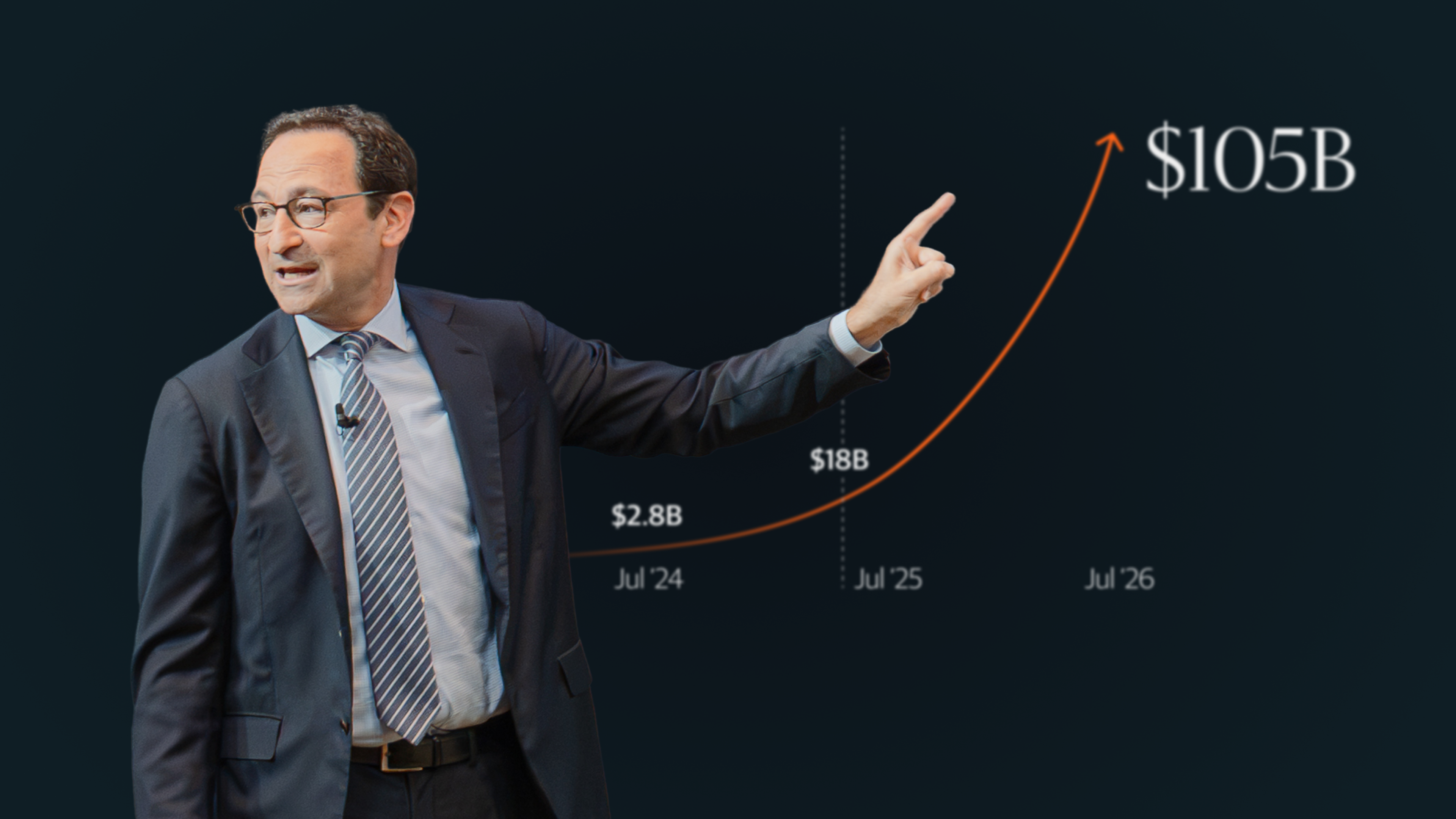
Yet the thing that gives me the greatest excitement, which you're gonna hear a lot about today of course, is what's happening around this technological revolution. What's happening with AI. $800 billion is going to be spent by five companies. Daniel Gross is going be up here, responsible for the capex spend and infrastructure and meta. That's an enormous amount of money. Little old Blackstone, with our leasing and data centers, we think this year we'll sign six gigawatts. Six gigawatts is $100 billion of data centers, another $200 billion of chips that the hyperscalers will put in. $300 billion is the size of the Finland economy. Now that won't all happen this year, but it just gives you a sense of what's going on in the ground, which is very bullish. And it's mostly in the US, but we think will spread more to the rest of the world.
And then we have this productivity boom that should come from all this. We saw this back in the 90s when we all went on the internet. Now we're gonna experience it at massive scale. The efficiencies that are gonna come from this technology are very significant. They've started obviously with coding and engineering. It's gonna start to diffuse to the broader economy. We've set up a business to try to help accelerate that. That's gonna be really good for growth. It's going to be really good for corporate earnings. So that is a fairly bullish picture. Now, what is the proverbial fly in the ointment here? It's that what's gonna come with this is pretty significant disruption. And the market has begun to recognize some of these risks, sometimes a little indiscriminately, but what is going to happen to lots of professional services businesses, information services businesses? Software businesses? We remember what happened to the Yellow Pages 20 plus years ago, that's now going to happen in a whole range of industries. And so incorporating that, and by the way, it goes beyond just that, think about when autonomous vehicles come, what that's gonna mean for automotive repair and insurance businesses. So I think as an investor today, there are real challenges to try to think about what's the world gonna look like in the future, but at the same time, enormous opportunity and acceleration of growth because of what's happening with the AI.
Courtney Reagan: That's a perfect segue because yes, challenges, but always opportunity. Blackstone is always looking for them and being very thoughtful as you've talked about. Not everything is gonna go up and to the right with AI. There could be some dislocations. But generally with this whole backdrop in mind, where are the most compelling opportunities for Blackstone?
Jon Gray: Well, clearly, and you'll hear a lot about this today, but the infrastructure that's going to make this a reality, we think is the best risk adjusted way for us to play it, because we all know there's going to be enormous need for electricity, the data centers, the robots, the autonomous vehicles, the reindustrialization, it's all going to plug into the wall. So, pipelines, utilities. Renewables, electrical equipment, utility services, what we do in our energy transition area, all of that. If you think about power and energy, that's a pretty easy thing to believe in, which we do it in a number of ways. Then of course the data centers, the neoclouds, really taking those electrons that come in and turning them into tokens. There's just huge need. Now, everybody talks about, is there overbuilding? That's a big risk, because there's a lot of capital. I would argue today the opposite is the risk, that the political pushback, which is growing, that the shortage of power, the shortage of turbines, the storage of memory chips, and the almost exponential growth in demand. Means these data centers, once you get them built, are gonna be incredibly valuable. And so we've leaned into that business on a global basis, the neoclouds as well, which we can talk about with our TPU announcement. I would say away from sort of the AI world and the infrastructure there.
I think defense sadly is gonna be a huge growth industry. If you wanted to make a bet in Europe, defense is probably the one area that's got the greatest tailwinds today as these economies go from spending or government from one one and a Half percent up to as much as five percent of GDP. I think real estate is going to really get a tailwind here as people look for terra firma they're nervous about the disruption they're, nervous about dislocation there's been this sharp decline in new building debt costs have come down and then I think capital will begin to rediscover this area it has certainly been a laggard for the last four years one of the least bubbly parts of the economy I would say logistics is my favorite part of the real estate ecosystem. I think secondaries will be quite compelling. I think that is going to mean there's going to be a large universe of secondary sellers. That's a dynamic that's very favorable for Vern Perry and that business of ours. I'd say on the credit side, these big corporate solutions often tied to the needs for AI infrastructure where we can provide private capital at scale, both investment grade, non-investment grade, that to me is interesting. And then I would just say on a global basis, wherever you're seeing people embrace capitalism, encourage risk taking, being thoughtful around taxation, is where we're seeing more growth. So today that's certainly in the US a little more of course in the middle of the country. It's also the case in the Middle East, which today is facing headwinds, but I think will rebound both the GCC countries and Israel. I think India will continue to be a place as it moves on this capitalist path. That we will deploy capital at scale. You'll hear from Amit. And then Japan has really been transformed over the last few years and become a very interesting place to deploy capital. And it doesn't mean there aren't opportunities in other markets around the world, in Europe, Canada, Australia, other emerging markets, but in general, these are the places where we're seeing higher rates of growth, which tends to translate into higher rates of return.
Courtney Reagan: Lots of areas of opportunity, obviously, that we're already sort of deeply embedded in. But just in the last two weeks, we've had four announcements of new initiatives or companies or platforms. It's a lot to go through. I can't believe we've gotten through this much time without me digging into it as a former, recently former news reporter. But I'd love to start, let's start with Anthropic Service Co., I guess. Talk about the opportunity there. What are the expectations and hope for the future?
Jon Gray: So I'll hit each of these quick. Anthropic, we spent a lot of time with the folks in Anthropic. We've invested in the company. The CFO and much of his team are ex-Blackstone private equity people who trained under Joe Barrata and Martin Brand. We were spending time, myself and Jas Khaira talking to Anthropic about our companies really, they use Claude Code with the engineers, but we're having a hard time changing workflows. Financial reporting, compliance, what can we do? And we identified, we all saw there's a gap between these super powerful models and the companies themselves. So the idea was to create a joint venture, we brought in some other investment firms with portfolio companies as well to try to bridge that gap. And that consulting company, I think, or that deployment company, should grow to be quite large. What excites us the most, and it goes back to Vik's flywheel, is we're going to be able to bring this technology to people, the best models, most up-to-date, to our 275 portfolio companies. And to us, that's very exciting. Okay, then let's do
Courtney Reagan: Okay, then let's do BXDC, which just IPO'd under Nick Pell.
Jon Gray: BXDC is the basic idea. What's the market hole there is that there are hundreds of billions of data centers being built. There are going to be trillions, ultimately, I think. And yet, there's no natural home for them today. These are great long-term assets. They're leased to the biggest companies in the world. You can buy them., and there wasn't a home, and so we created a company to be part of that end of the ecosystem. And what you'll get the effect of here, or the sense of, is we're trying to do everything from the energy over here all the way to Anthropic deployment across that entire spectrum, deliver returns, but do it in a thoughtful way, because we know there'll be ebbs and flows, and not everything's gonna win.
Courtney Reagan: Right. Fair enough. And then Google TPU, that was a fun announcement last night.
Jon Gray: Yeah. So Google TPU is in some ways similar. We're trying to fill a gap. If you think about the GPU, which is the heart of the entire AI world, it reminds me a little bit of what Amazon had when it started the cloud business. Basically almost 100% market share. And over time, Microsoft, Azure, Google Cloud came along and they didn't grow as large, but they grew quite a bit. And we think when it comes to these chips, there'll be a similar dynamic. Nobody's saying NVIDIA's going away. We're investing in a ton of NVIDIA data centers, neoclouds, but there's room for more players. And Google has a TPU that is highly effective, that is trained Anthropic, trained Gemini, and we think there's gonna be more and more demand for it. And yet they need some people who can help with the financial burden, a company that can turn this into more of a compute as a service as opposed to a huge capital investment and also has the expertise to manipulate this and install it and make it work in the optimal way. So again, we're creating a company from scratch because there's an enormous opportunity and we want to try to fill it and bring it to our investors in the process.
Courtney Reagan: And then BXN1 is also going to help sort of our insights be spread across the portfolio in a thoughtful way led by a really dynamic leader.
Jon Gray: Yes, BXN1 was something we announced in the last couple of weeks, it's been a busy couple of weeks. I know. The idea was basically similar to what we did in credit a few years ago, where we took insurance, corporate credit, asset-backed credit, we were doing them all separately and we said this doesn't make any sense, let's put it together and create BXCI under Gilles, it has been a massive success. Now, the idea is we're doing these high-growth companies. N of one companies, very special businesses. We've been investing in them. Sometimes we're doing structured things, sometimes growth equity, and we were doing it in different business units. So let's put it together under one roof, under one of our most experienced investors in Jas Khaira and say we're gonna really go for it. We're gonna be part of the firmament in San Francisco and Northern California. And I think we have a really special right to win because we own all these businesses. Who in many cases can deploy these new technologies, and we have a unique ability to show up with scale capital, both for debt, for structured equity, for common equity. We have something really special, but we wanna house that together in one place to get to optimal outcomes.
Courtney Reagan: So it's a lot of thoughtful opportunities, but I think it's only fair to talk about things that are percolating, that maybe are worries of folks here in this room. Let's talk about software and the idea of software disruption or disintermediation by AI. How are you thinking about that across the investment landscape, but obviously most particularly in our portfolio at Blackstone?
Jon Gray: So I would say, there's definitely going to be significant disruption in software. And again, I like to look back at history. Have we experienced things like this? So I go back, and I say. When retail came, when online retail came along with Amazon, you know, there was, you could have said everything's gonna get wiped out, all traditional retail. And what ended up happening was there was Sears Roebuck and there was Kmart and there were Toys R Us and they went the way of the dodo bird. But at the same time, Costco stocks up seven-fold, or I think 20-fold, Walmart's up seven-fold. TJ Maxx is up something like 40-fold. And so those companies found a value proposition that worked in an online or omnichannel world. They found ways to use the technology or to be competitive, and they succeeded. And I think in software, there's gonna be very similar dynamics. There will be companies that have deeply embedded systems of record that are part of the infrastructure, that also have management teams who wake up and transform their businesses just as many software companies had to go from on-prem to cloud, now they're going to have to go to cloud to agentic, and some of them will be able to do that. And some of those companies are going to be worth a fortune more than they are, some are not going to appreciate and some are going to go away themselves. I do think one thing that is legitimate and in concern is, and this does impact many of the businesses folks in this room are invested in, because there's so much uncertainty around software, and again around a lot of white collar businesses, this resetting of multiples lower, I think that's just a fact of life. Now it may be a few years from now some company will show they're clearly in safer place. But I wouldn't assume the 20 times multiples that existed 12 months ago for many of these businesses because they were seen as safe, recurring revenues are gonna persist. Even though on the ground today our portfolio companies are continuing to perform very well, both in credit and in private equity, we all know it's going to be a more challenging time going forward. I think we have to accept lower multiples. That's just the price to pay and it does mean the liquidity in that area is tougher and it does mean you'll see markdowns in those areas. We took pretty significant markdown in the first quarter against our private equity growth equity holdings in software. Fortunately, as a firm, it's 6.5% of what we do overall. Nevertheless, this is real. And then I would say on the credit versus equity, it's been a fascinating dynamic that all the focus has been around private credit and software, and yet the software is the senior 35% of the capital stack. And so, yes, there will be cases where the debt loses money, but the real story here is, what's the implication for equity values? What happens as the growth slows, as it's harder to hold on to management teams, this compression, what's gonna happen? And as I said, in some cases, these companies are gonna do some remarkable things. And people are not gonna want just in a large language model their most proprietary information and so forth, but it's gonna take very active management to get to the other side. So it's an area that's in the teeth of the storm, but for us, we're pouring our resources to make our companies move into this new world as quickly as possible.
Courtney Reagan: So, more part of a normal business cycle, not an outright disaster across the board, and some companies will survive and be improved.
Jon Gray: Yeah, I would say different than just a pure business cycle because it's disruption. I think it's something where you have to adjust to the new world that's coming. And so it's a new set of conditions. So there's been a sort of step function change in what the world looks like. And if your model is based on per seat pricing. Right? And you're no longer using seats, you're dealing with agents. You need a different business. By the way, it's not that different than what is a billable hour at a law firm going to be. I'm not sure. So I think you just have to accept this world is changing. In the near term, the impact for all of us in this room, as I said, is lower multiples in this space for the foreseeable future.
Courtney Reagan: You talked a little bit about private credit, but it's still getting a lot of attention. Do you think it's fair? Are there real concerns there? I mean, we have a big portfolio. What do all the patterns and the data show you? What do you believe in?
Jon Gray: Well, you know, what's fascinating is, you know, why is there so much noise around this? And I think the biggest reason is we've disrupted some business models. If you think about who the biggest critics are, they're often leaders of large financial institutions or long-only fixed income managers. And what's happened, of course, is what is private credit? It's we at Blackstone taking the capital of the people in this room, your institutions, and bringing it right up to borrowers. And in the process, on the non-investment grade side, getting rid of a bunch of origination, financing costs, CLO costs, securitization costs, so that you get a higher return than if you bought, let's say, a bond that came out of this. And what the borrowers get is much more certainty without flexing their pricing because they're dealing with a counterparty that has certainty and is going to be in the storage business rather than the moving business. Now, there are a lot of people along that food chain who don't love this. I keep using Amazon. This basically directs a customer model. And so that lends people to go out there and say, this is creating huge financial risk in the system. Now, as a reminder... The traditional system, and we're a huge CLO player too, is basically a 13-time levered bank essentially sells through some holding and flipping, whatever, to an 11-times levered CLO. That's what it is. And this model has us use your capital and either do it on an unlevered basis or often one times or lower leverage. That is not risk to the financial system. Now, what is reality? Reality is that as base rates have come down, as portfolios mature, as you get a little bit of disruption here, you'll see some higher loss rates, but the yields are high, the leverage is low, so we're debating whether, how much the returns come down. How that translates into some sort of enormous financial crisis, I literally have no idea. So, I think this is, again, because you have this disruption that's happened in the marketplace, there are folks who'd like to see this go away. But because it's such an efficient model, individual investors may be concerned in the near term and you see these elevated redemptions. But the folks in this room have actually come to us and want to give us more capital, seeing the disruption as opportunity, because the underlying economies continue to be strong and generally companies are healthy. So, you know, it's one of those things, the market will go through this, private credit will continue to grow. The focus has been on non-investment grade. I think where you're gonna see the most explosive growth is on the investment grade side, particularly providing capital to this really, this revolution, this AI infrastructure build out because you need private capital, the flexibility, the structure to do the scale of what's coming and to do it in a way that's different than liquid markets for these huge development projects.
Courtney Reagan: I want to bold and sort of underline one of those thoughts where the institutional investors are still interested in private credit. They understand that maybe even if a loss rate takes up a bit, it's more of a normal level because we've been sitting below that normal rate historically for some time. Okay, so then I want to move on to exits because everyone's interested in that, right, they want to get paid for their investments. Particularly if they've been along with us for the long run. You've called 2026 the year of the IPO. Here we are in May. Do you still feel good about that? Do you regret that call?
Jon Gray: Oh, I would say I still feel good about it. I mean, look, you're helped by the fact that the three biggest private companies in the world are likely, probably two of them go public this year between SpaceX, Anthropic, and OpenAI. But more broadly, the market away from those AI-impacted companies, I think, will still be pretty good. I mean, the companies we took public last year, Medline, which Vik mentioned, Legence have performed incredibly well. We just did two IPOs. You mentioned one in the data center space last week. We did one in India in the office building, office REIT area. So, I don't see this as, what I do see is, that subset of companies that's in the area of uncertainty will be harder, but the AI sort of beneficiaries and the AI unaffected companies, fast food restaurants, medical supplies, I think the market will be receptive to those as long as markets maintain their sort of equanimity. And I would say this... If there is a resolution to the conflict, then my bet's going to look very good.
Courtney Reagan: That's true, that is true, and for the world, I think we all hope that there is some resolution, truly. We've seen tremendous growth in private wealth. This is obviously largely an institutional investing audience, so how do the two things work together or not? What does the growth in private wealth mean for this group of folks?
Jon Gray: Well, I'd start by saying we've been at this a long time. Okay, you know, we started, it's been, I don't know, 25 years since we started - Steve and I are just looking at each other - when we were raising funds in the wealth channel. And you know, today, we manage over 300 billion dollars in the space. So it's not anything new to us. I just view it as the natural evolution of the business. We had a business that was all US pension funds, and then it was global pension funds. Family offices, sovereign wealth funds. Things have grown over time, and this is another area where we see growth where investors want the benefits of returns and diversification from private assets. I do think the thing to keep in mind is that the investors in this room have been and will continue to be the bedrock of our business because your committed capital is not pro-cyclical. It's there. We're able to call it when opportunity emerges. We need this capital, the relationship, the foundation for everything we do at our firm. And the question I get is, well, you know, are we gonna be left behind for this? And we keep saying it. And then what I'd say is, look at two things. Are we delivering for you in terms of returns? Because that's really what the promise is. And for the larger investors in the room, are we delivering the co-invest as promised? And there, we've doubled, I think, each of the last two years, the amount of co-invest we've delivered to our clients. Our returns virtually across the board have been exceptionally strong. And I would say on the positive side, the scale, having this capital in the context of, say, BXPE to allow us to do a Jersey Mike's or a Hologic without having to call a bunch of outside third parties. Or to do this Google TPU business, and to be able to say, they said we barely could talk to anyone about this, us having the scale of capital allowed us to do it. So I see it as a real competitive advantage for us, and yet, and always, we stay committed to this group of people, we have to deliver returns, we have deliver on our promises.
Courtney Reagan: So I've only been at Blackstone now for a little over two months, but I think you already know, because I've asked you several times, how you do it all. How you prioritize the way that you think about your role. I mean, can you walk us through some of that? How are you as efficient as you are? What are your top priorities? What do you make sure you're tackling first?
Jon Gray: So in terms of priorities, well, I'd start out by saying I love what I do. So I think that's really important, that if you genuinely love your job. If you genuinely your job, it makes it much easier. And you're enthusiastic even when you're traveling halfway around the world, because you're constantly learning. But in terms of prioritization, for me, I would say, one, it goes to those returns because unless we deliver that, nothing else really matters. Nobody's going to want to allocate capital to us because we hold a good LP meeting. And then two... The culture, the people, the organization. And it's hard because you have to evolve. I mean, attracting, retaining the best people, which has always been core to Steve's philosophy. How do you get tens? How do get the best, the most driven people who care a ton, who are entrepreneurial, smart, but also nice human beings, how do you them in the building and then how do retain them and motivate them? And that means at times some people have to leave, new spaces have to emerge. What we love is that our business is growing, it creates opportunity for our younger people. It's not a static place. So enormous commitment to the investment process, reading those memos, thinking about where the world's going so that we're on top of it, we're one step ahead so we can generate excess return for our clients and that we always have the rigor, the downside, the focus, the diligence, that we are great stewards of capital and then making sure we have the absolute best people possible, that they're enjoying it. And it doesn't mean it's perfect, but where's the culture not working? Where we have something that's wrong? How do we keep our people connected? We do our internal Zoom call every Monday, Blackstone TV, because we want to keep people connected. We want them to have a shared sense of mission. We want to feel like they're part of something special. So, to me, that is always first and foremost a priority.
Courtney Reagan: Thank you so much, Jon. This was really lovely. Thank you all.
Jon Gray: Thank you all so much. Thanks for being here.
Recorded on May 19, 2026.
Neither this video nor any of the information contained herein constitutes an offer to sell, or a solicitation of an offer to buy, any security, Blackstone fund or other investment vehicle or strategy.
Past performance does not predict future returns, and there is no assurance that any Blackstone fund will achieve its objectives or avoid significant losses. This video may contain forward-looking statements, which are subject to various risks and uncertainties, and actual events or results or the actual performance of any investments may differ materially from those reflected or contemplated herein. Statements contained herein are based on current expectations, estimates, opinions, and/or beliefs of Blackstone or third parties as of the date of the recording and should not be construed as research or investment advice. There can be no assurance that views and opinions expressed in this recording will come to pass and are subject to change. There can be no assurances that any of the trends described herein will continue or will not reverse.
For information about Blackstone's business, including risks and financial information, please refer to our most recent Annual Report on Form 10-K and subsequent reports filed with the Securities and Exchange Commission. Additional information is available here at
http://ir.blackstone.com. This video is owned by Blackstone and may not be downloaded, recorded or reused in any way without Blackstone’s express consent.